Double-banded Courser Cursorious bitorquatus
(Rhinoptilus bitorquatus)
Rarest bird, Critically Endangered, a bird listed as a Lost Bird species, Inscrutable, enigmatic, Mysterious bird, Nocturnal, Elusive, Innocent bird
కలివి కోడి
Introduction
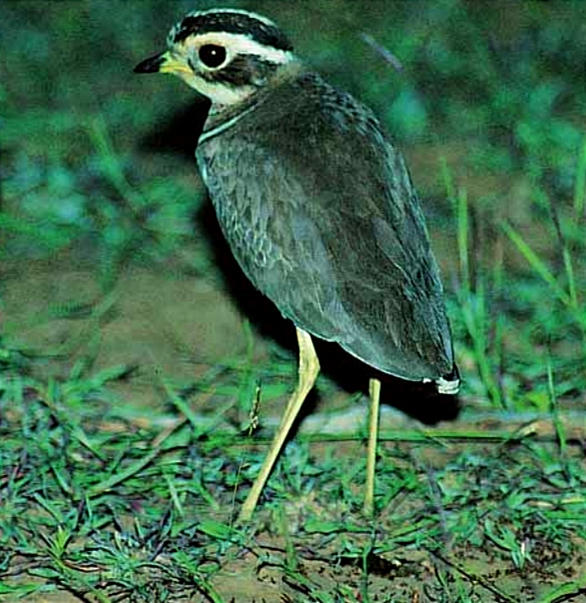
Jerdon’s Courser (Rhinoptilus bitorquatus) JC is a nocturnal cursorial bird known only from Eastern Ghats, found in the state of Andhra Pradesh, Telangana, and some other nearby southern states of India like Maharashtra, Karnataka etc.
It is one of the world’s rarest bird species and is classified as Critically Endangered (CR) by the International Union for Conservation of Nature (IUCN).
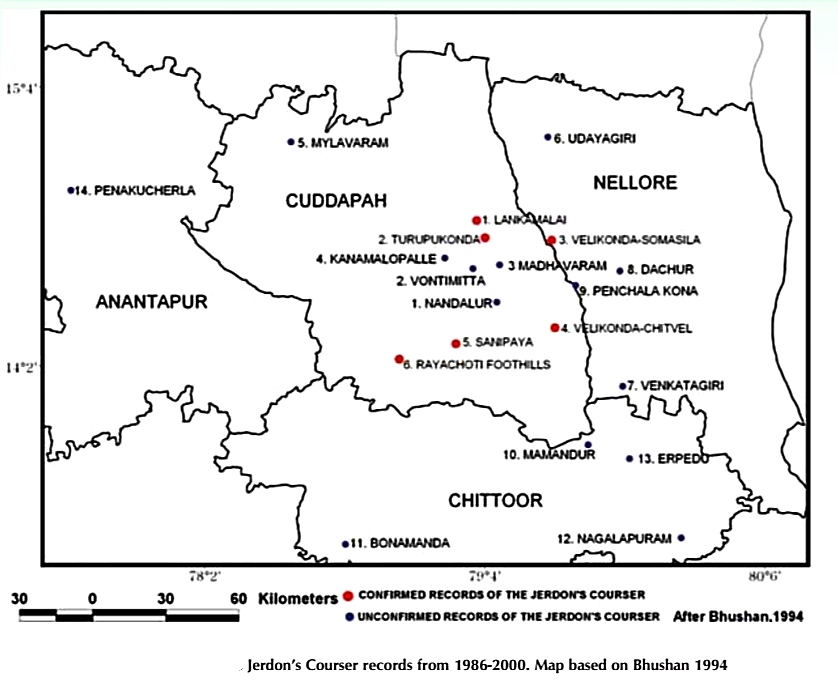
Rediscovered in 1986, after being thought extinct. Primarily found in Andhra Pradesh. The Sri Lankamalleswara Wildlife Sanctuary is a crucial area for JC’s conservation.
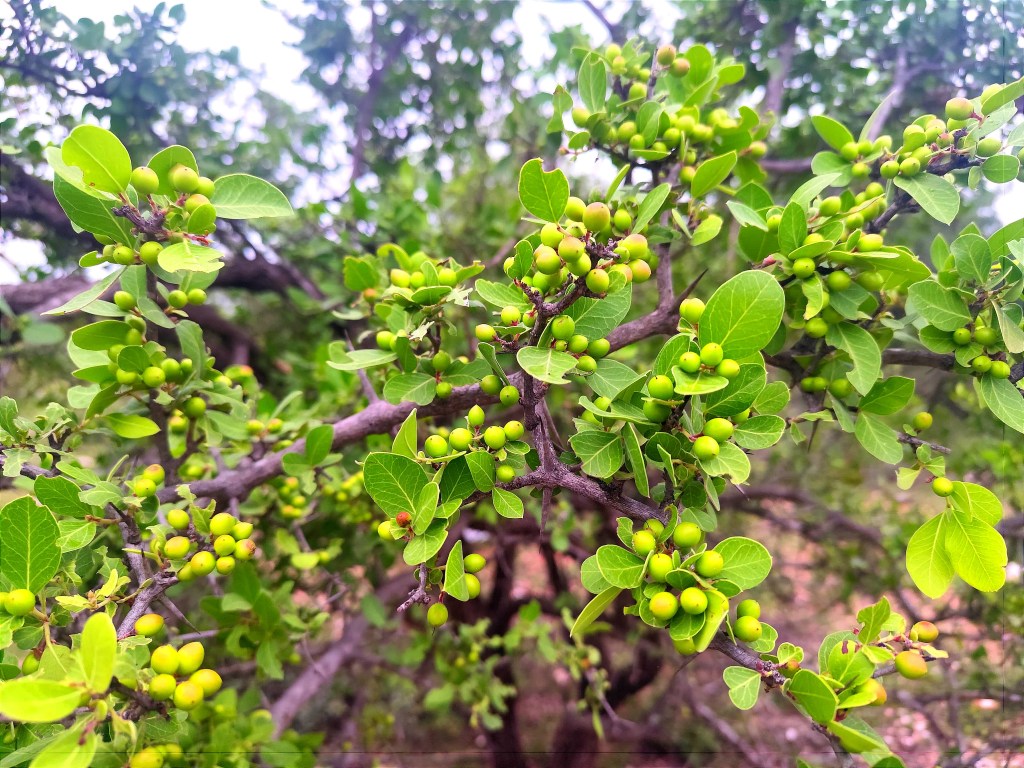
In Telugu language, it is known as Kalivi kodi (Kodi – bird, Kalivi – Carissa spp., a bird that resides on Kalivi chettu). Also known as Kalivi Pitta or Adavi wuta-Titti. కలివి కోడి or అడవి కోడి
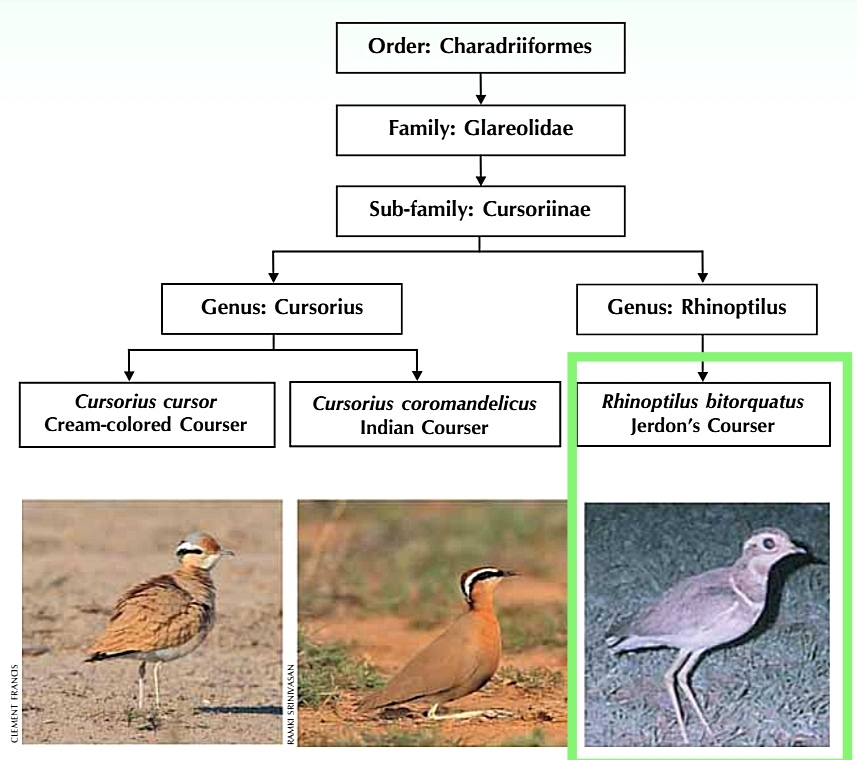
Taxonomy
| Sr No. | ||
| 1 | Kingdom | Animalia |
| 2 | Phylum | Chordata |
| 3 | Family | Glareolidae |
| 4 | Sub-family | Cursoriinae |
| 5 | Class | Aves |
| 6 | Order | Charadriiformes |
| 7 | Genus | Rhinoptilus |
| 8 | Habitat type | Shrubland |
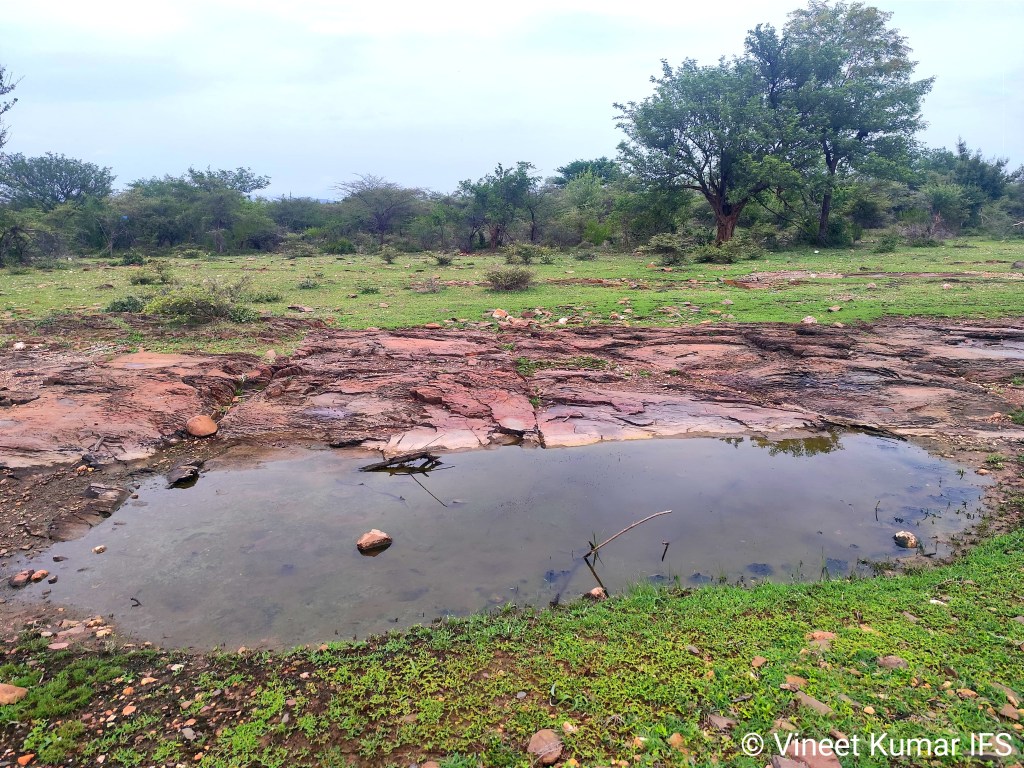
Habitat
Kalivi kodi (Kodi – bird, Kalivi – Carissa spp.), resides on Kalivi chettu. करौंदा
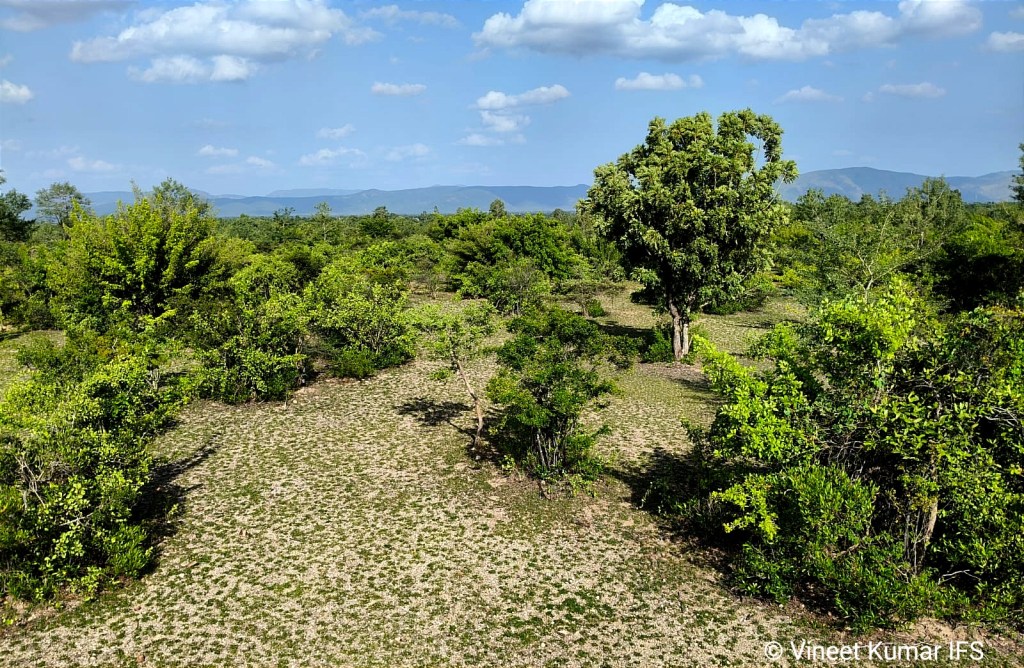
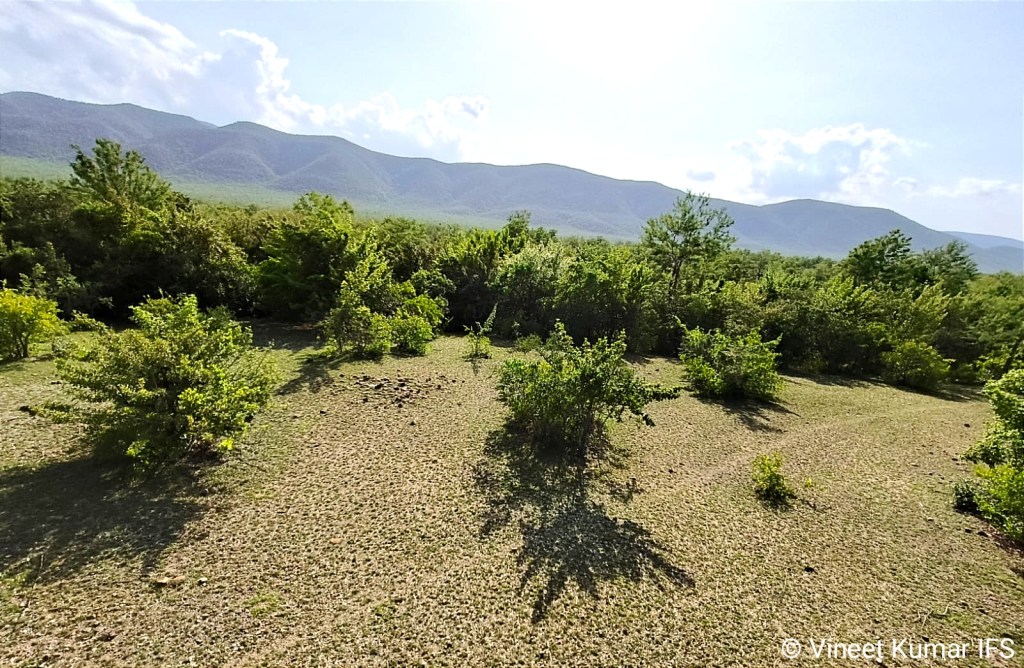
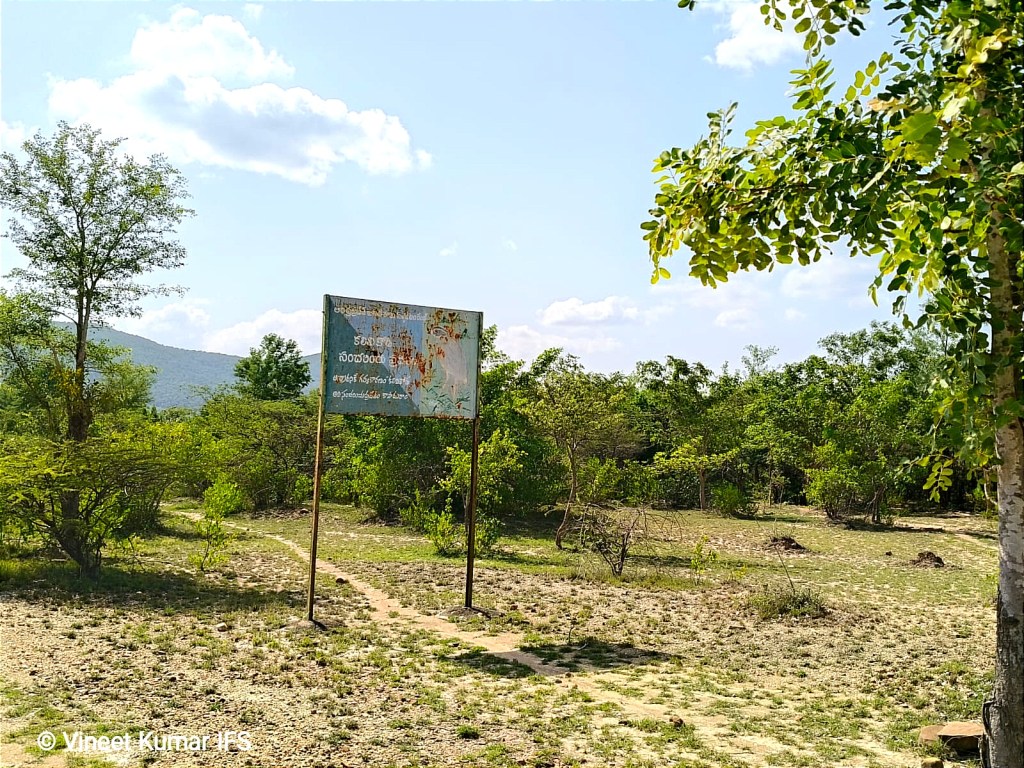
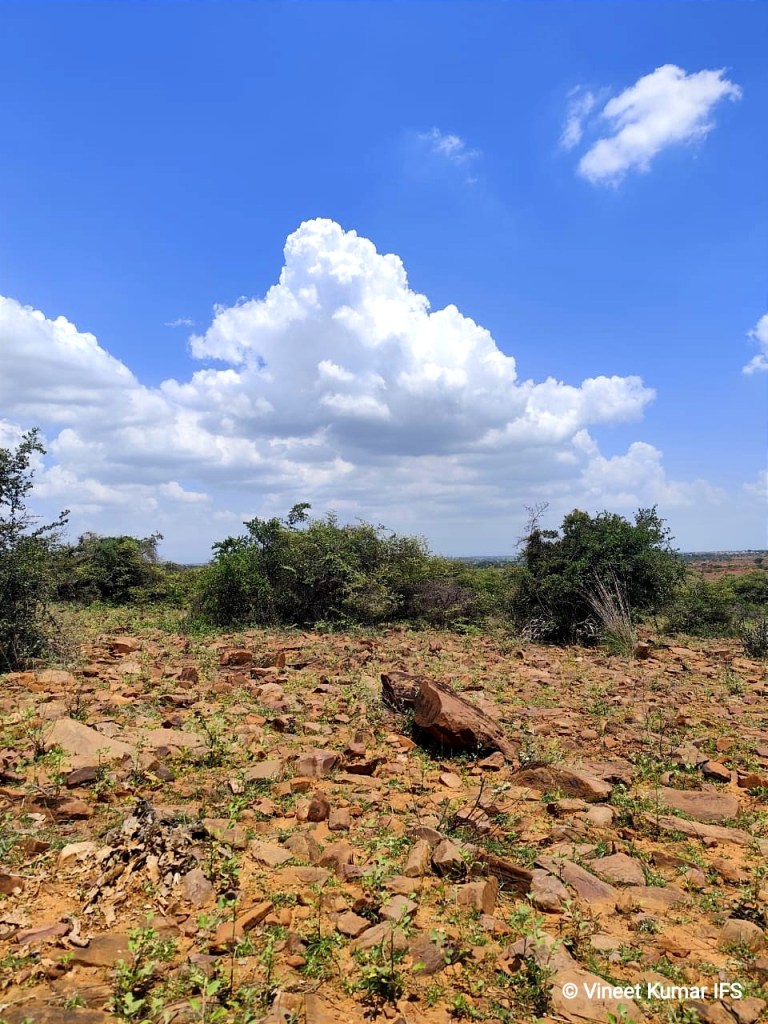
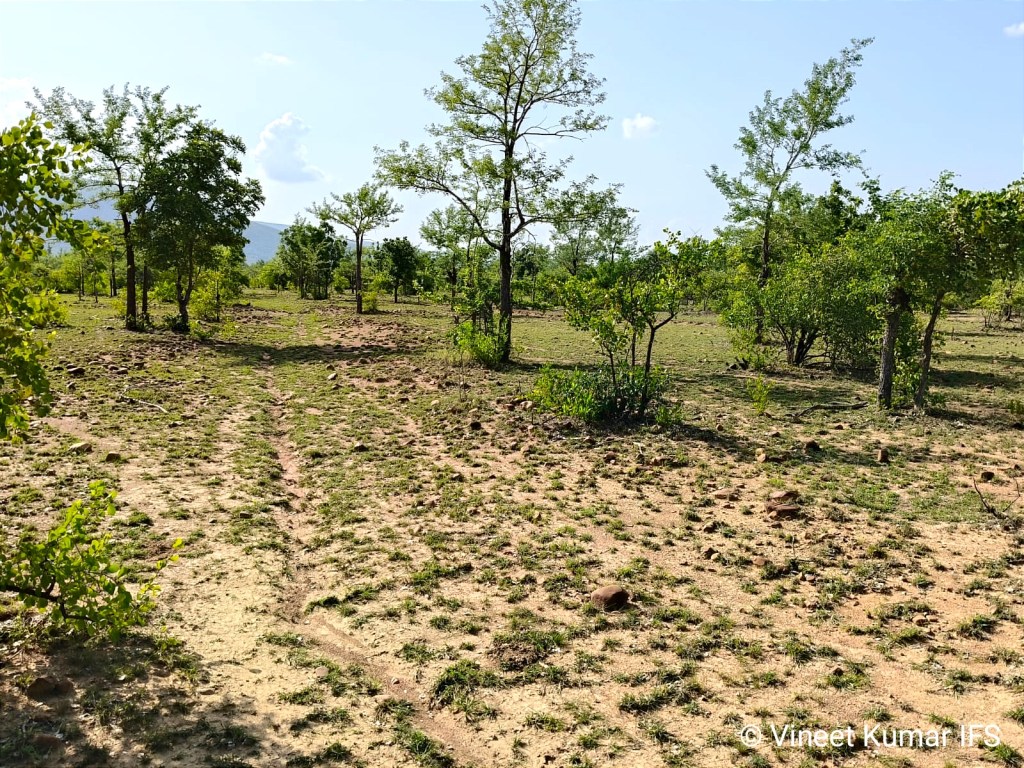
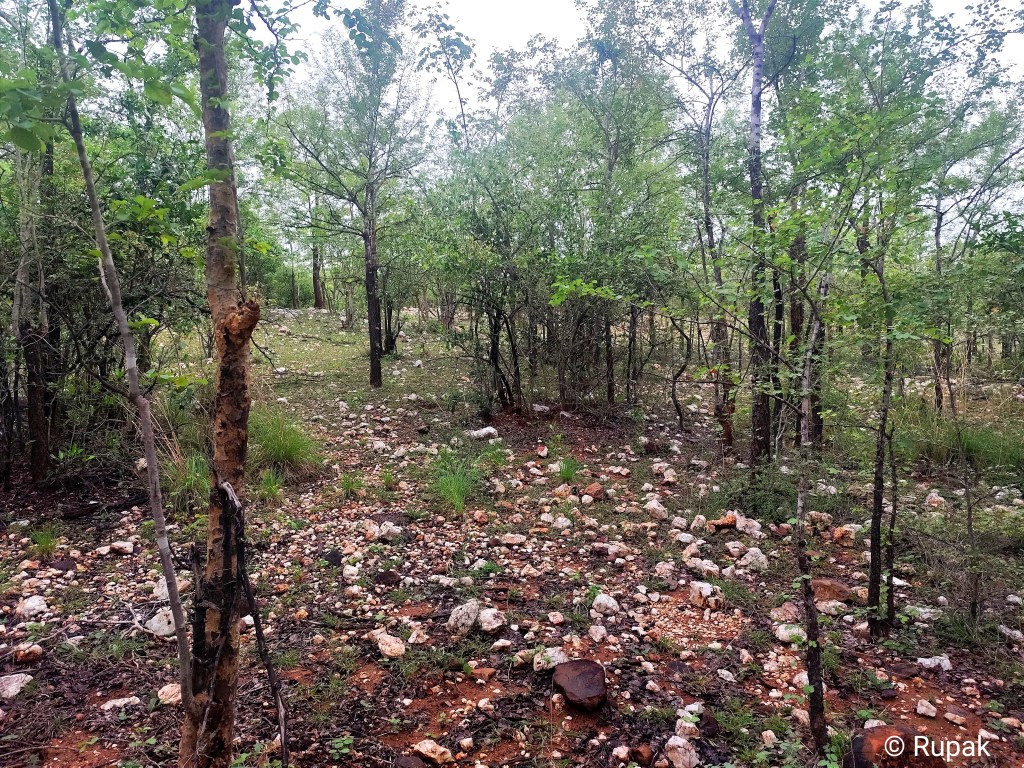
Scrub forests with open patches and bare ground habitat potentially frequented by the Critically Endangered Jerdon’s Courser, emphasizing the importance of preserving this ecosystem.As we move from the open areas towards the hills while still in plains, tree density increases with Hardwickia binnata, Dolichandrone spp. being dominantly present along with scrubs of mostly Zizyphus spp., and Carrissa species. The ground is mostly with small to medium size gravels and highly alkaline soils.
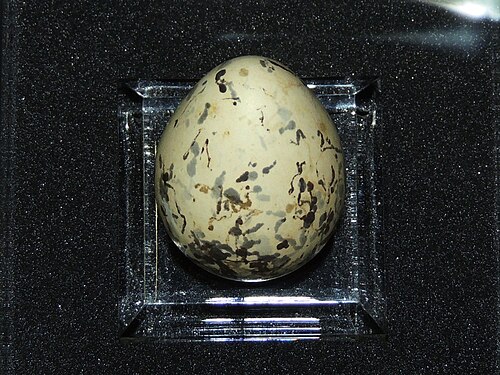
The only known egg of the bird is preserved at the Zoology Museum, University of Aberdeen, which was collected by Ernest Gilbert Meaton, a vet working at Kolar Gold Fields, Karnataka, in the year 1917.
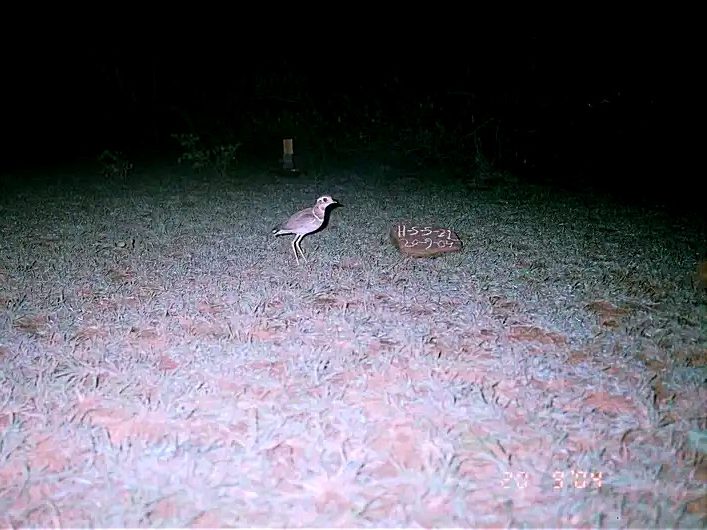
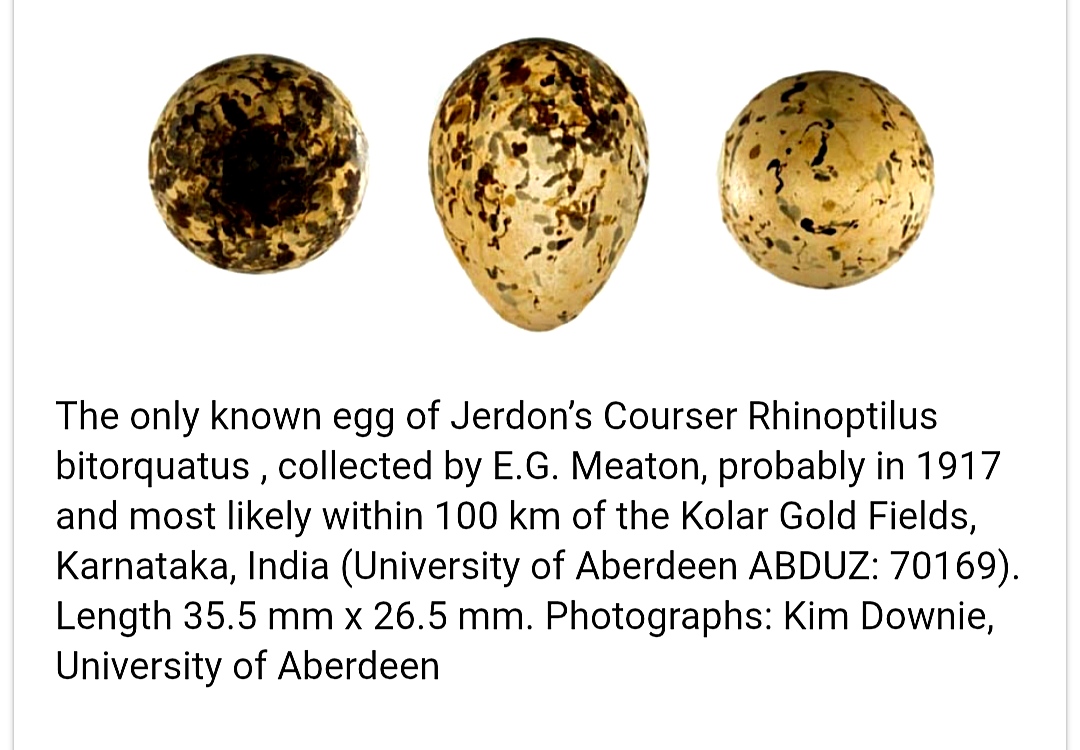
Meaton’s egg collection was purchased by George Falconer Rose, a successful expatriate Scot working in Calcutta, and given to Aberdeen Grammar School in 1919. In the 1970s, the school gave the collection to the University of Aberdeen, where the egg was discovered in 2008, the first known egg of the species at the University. Its identity was confirmed by DNA analysis. The type specimen of the courser now appears to be lost, but five other specimens exist in collections. (Reference)
The Jerdon’s courser is considered seasonally monogamous (mates with 1 partner each season), females lay up to 3 eggs, but a single egg seems to be more realistic. From 1895 and 1977 historical reports of local shikaris describing a nest with two eggs on the ground. Not much information available regarding its eggs.
Despite its rediscovery in 1986, there is a very little documented information exists and the species remains poorly studied. Because of its Nocturnal and well-camouflaged nature (during danger they tend to run rather than fly), habitat restrictions, smart behaviour, less number of individuals etc.
Location
Features
The Jerdon’s Courser is the sole representative of Genus Rhinoptilus in India.
Life Span -Unknown
Physical Characteristics:
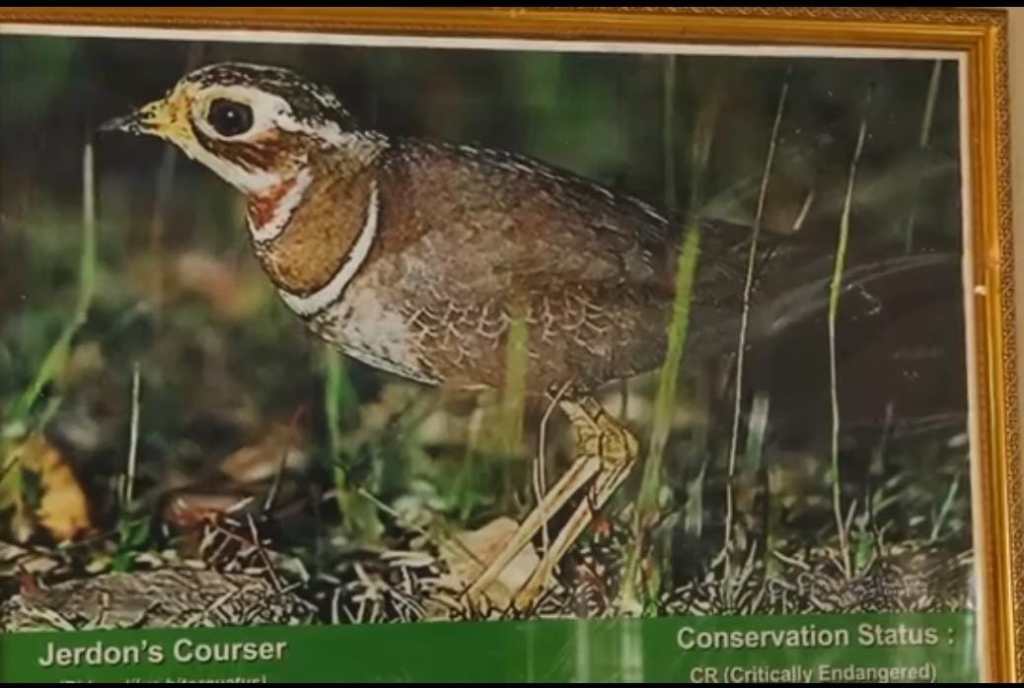
Size and Shape: It’s a compact, lapwing-like bird with a relatively large eye. Bill: The bill is short and bicolored, with a yellow base and a black tip. Plumage: The upper plumage is grey-brown, with a whitish chin and throat. A rufous fore-neck is separated from a brown breast by a white band. A second white band runs across the lower breast, hence the name “double-banded courser“. The belly is whitish, and the tail is black and white, especially visible in flight. The legs are pale yellow. Head: It has a blackish crown, a broad buff supercilium (eyebrow stripe), and an orange-chestnut throat patch. A narrow white stripe runs along the top of the head. Wings: In flight, it displays a mostly black tail and a prominent white wing bar.
Behavioral Characteristics:
Nocturnal and Crepuscular: It is most active at dawn and dusk, and during the night. Habitat: It prefers open patches within scrub-forests and dry, thorny scrubland. Vocalization: It is known for its distinctive call, a short series of two-noted whistles like “tuick-tuoo” or “Twick-too… Twick-too”. Diet: Jerdon’s Coursers are insectivorous, hunting invertebrates by sight. Movement: They walk with an upright stance, using their long, stilt-like legs.
Calls Twick-too…Twick-too… Twick-too or yak-wak.. yak-wak
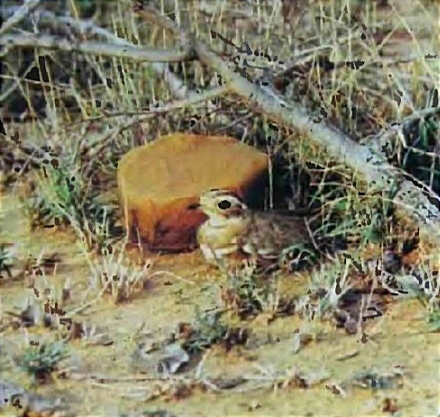
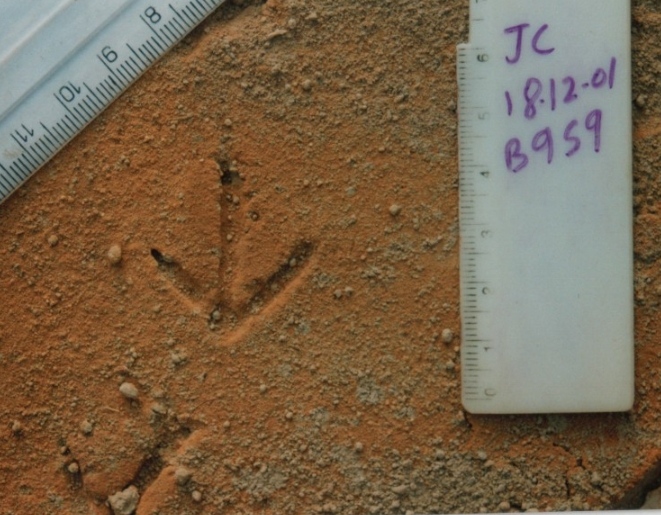
Conservation Status and Threats
The species is critically endangered and number of individuals are unknown. Last sighting happened over two decades ago. And very limited information is available. Change of land use pattern, Sound and light pollution, Bird hunting, Habitat destruction etc. are the main threats.
When was the Jerdon’s Courser first recorded, and when was it last officially sighted? (Also when was it last unofficially sighted either by locals or without any visuals)
Jerdon’s courser was first recorded in 1848 by Thomas C Jerdon, a British surgeon. It was thought to be extinct in 1900s untill re discovered in 1986 by Bombay Natural History Society. Last verifiable sighting happened in 2004 in Sri Lankamalleswara Wildlife Sanctuary in Kadapa district of Andhra Pradesh. Some sighting have been claimed in 2008 and 2009. After that no sighting has been claimed unofficially also even though some claims are their about listening it’s sound but they are not verified. The local person name Aitanna from Reddipalli village in Kadapa district found the live bird in 1986, later the bird didn’t survive. Since the rediscovery in 1986, Forest department and other researchers has been focused on Sri Lankamalleswara Wildlife Sanctuary and its immediate fringes.
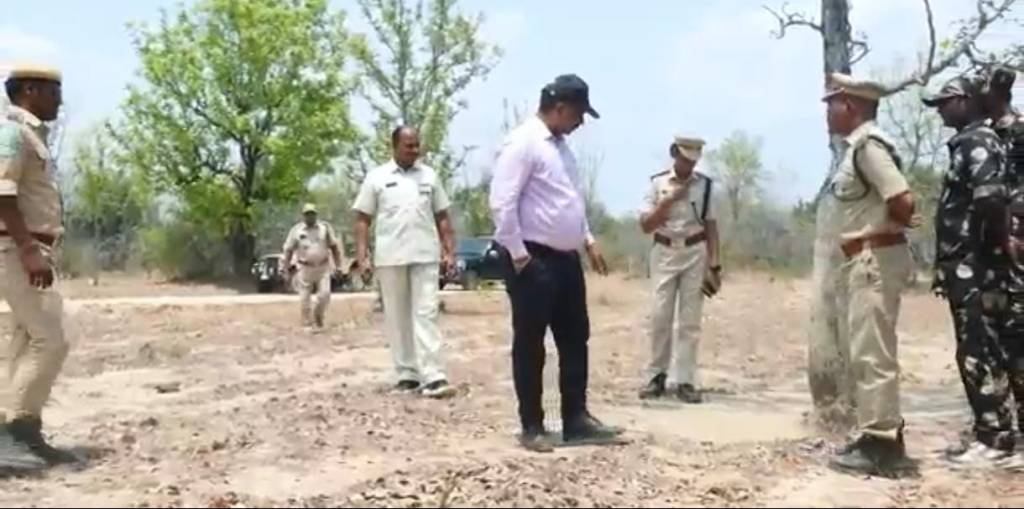
Which specific areas or forest ranges are being surveyed currently to trace its presence?
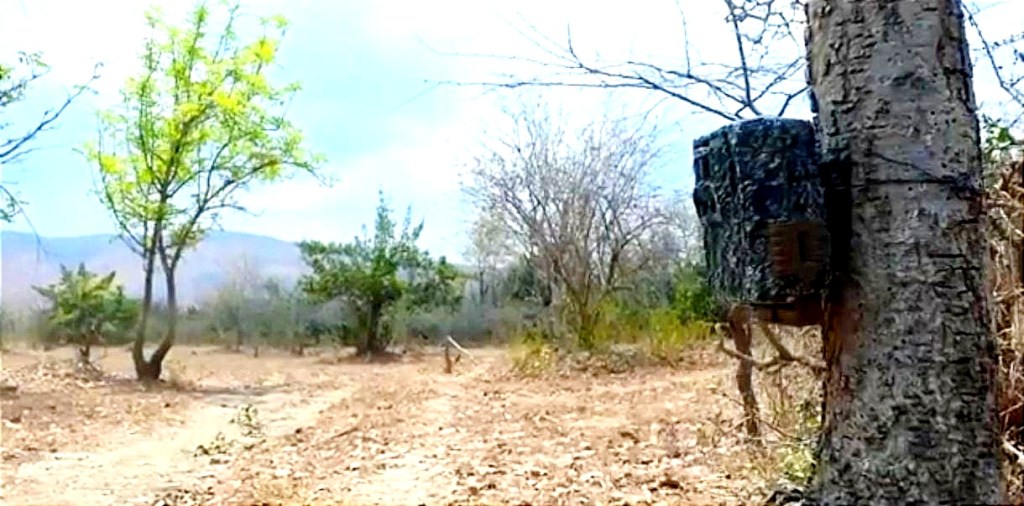
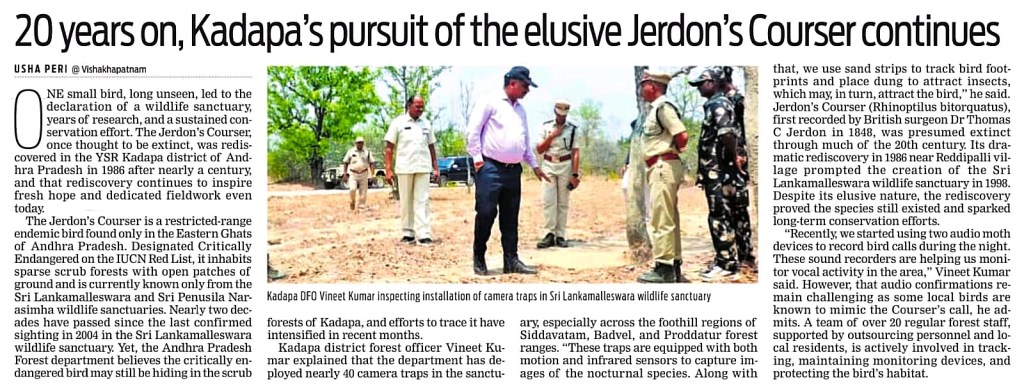
Currently AP Forest Department in Kadapa district has placed camera traps for monitoring purpose in Sri Lankamalleswara Wildlife Sanctuary especially the foothills which a scrub forest and habitat of the species. It spreads over Siddavatam, Badvel and Proddatur ranges of Kadapa forest division.
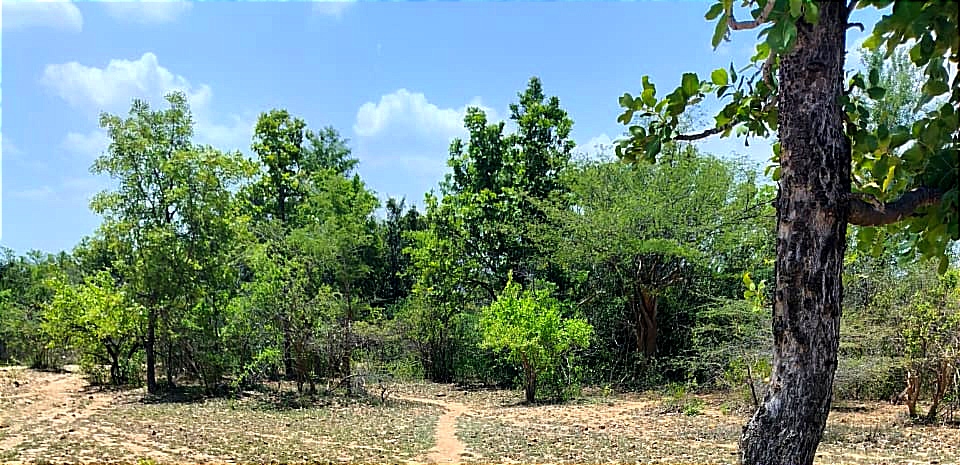
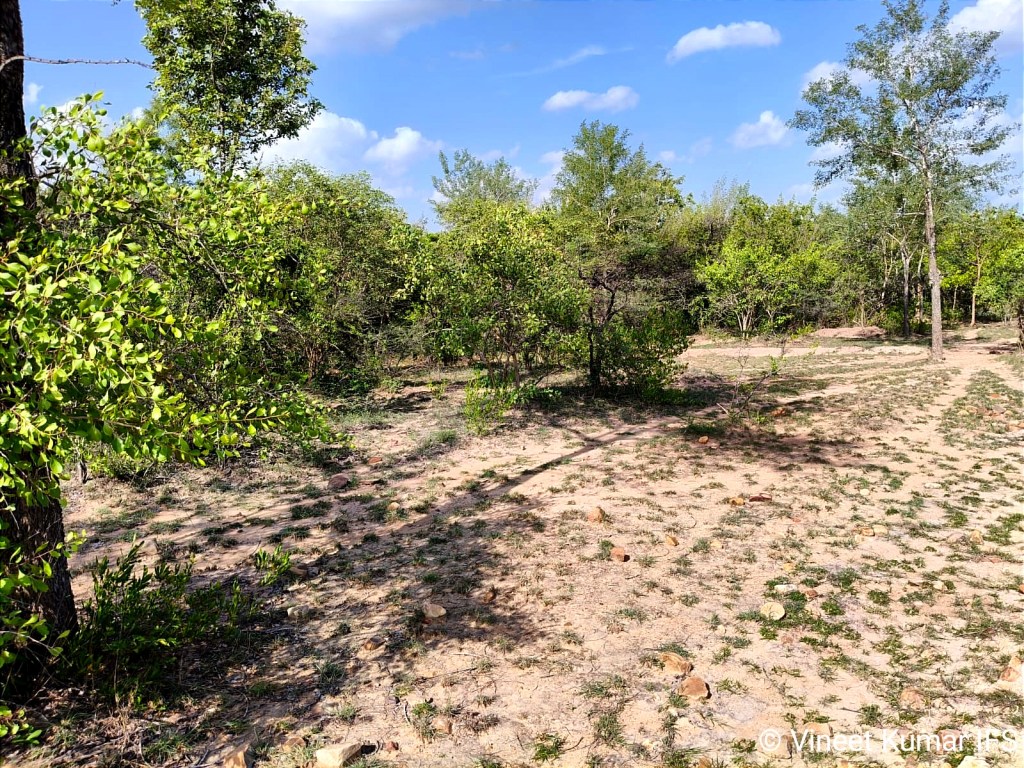
What methods are being used in the search? How many camera traps and acoustic monitoring devices have been deployed for this effort?
Currently we have deployed camera traps for image capture which uses motion as well as IR sensors. Also we utilize sand strips to monitor birds’ footprints and placing of dung for attracting birds towards insects. Recently we have started using audiomoth devices for recording and monitoring sounds. Initially 2 audiomoth devices have been deployed. Drones are also the efficient way for monitoring the bird habitat with minimal human intrusion and ethical considerations & safety of birds.
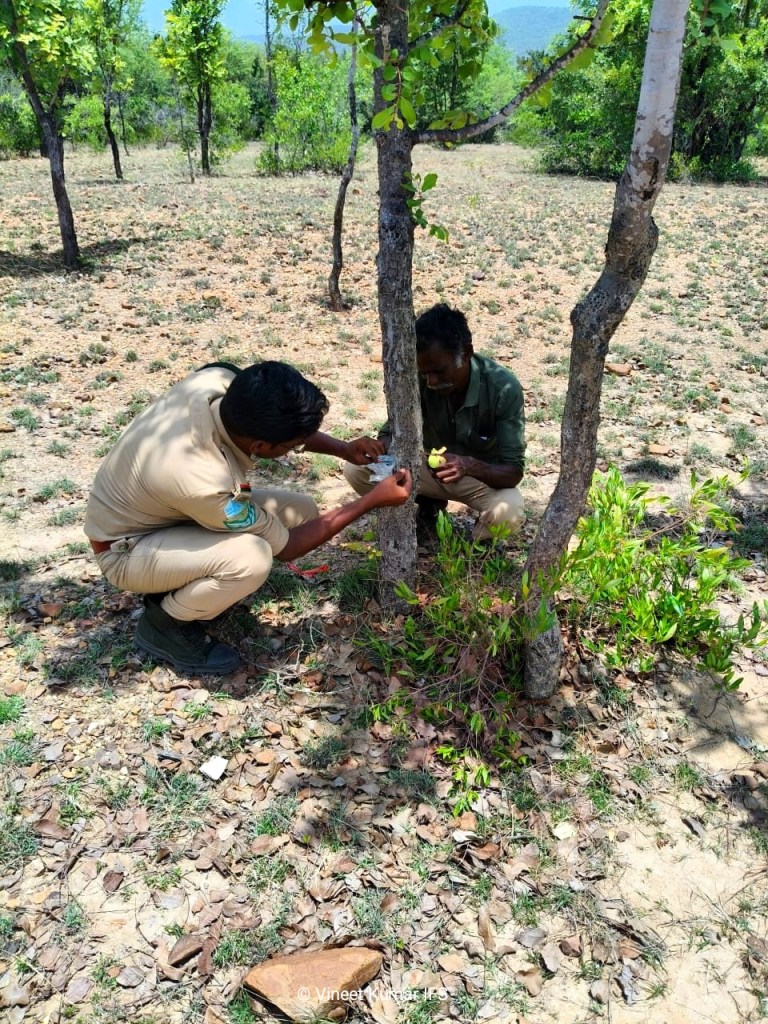
How many forest department staff and experts are involved in the survey operation?
More than 20 regular forest staff on daily basis along with several outsourcing and local people is involved in tracking of bird, monitoring devices, and protection of its habitat regularly.
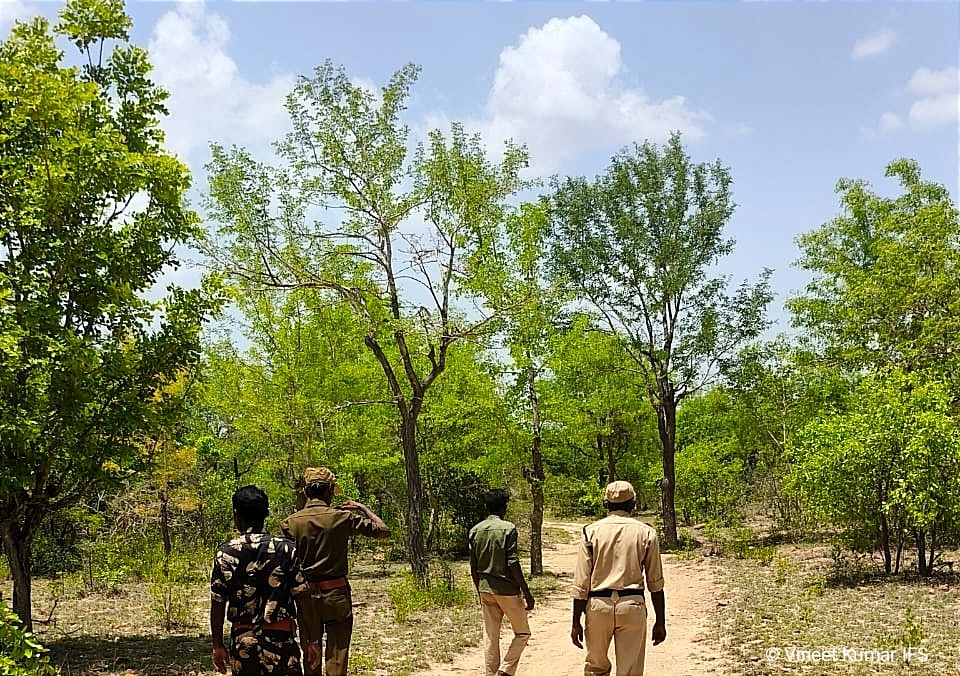
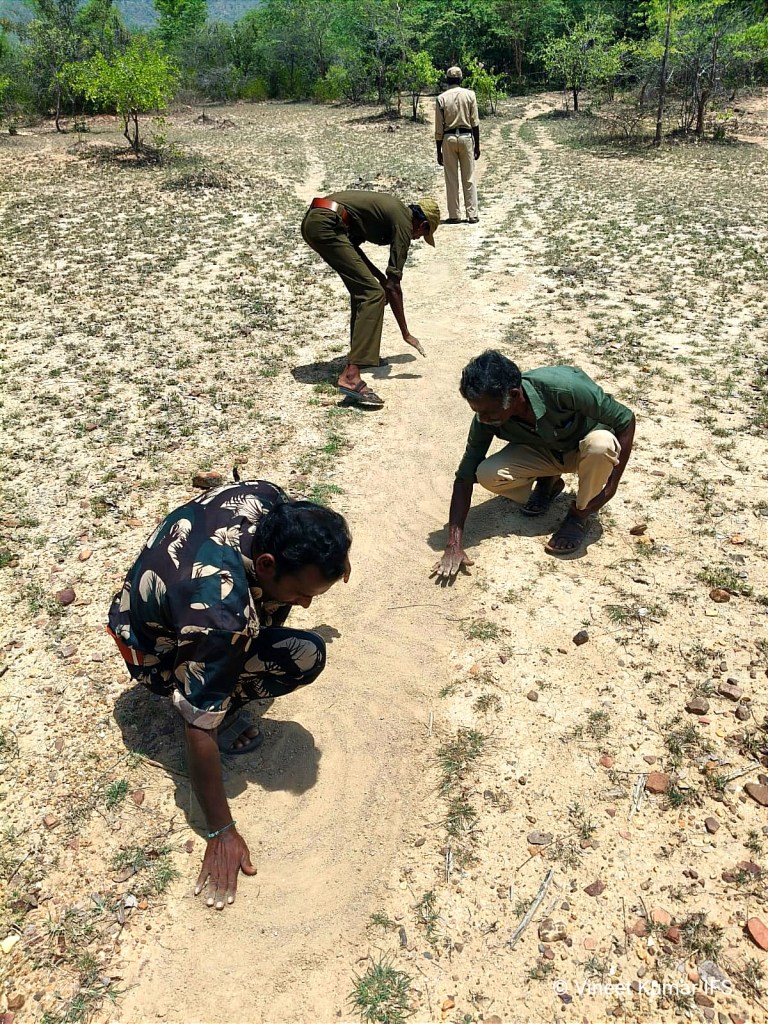
Apart from this experts and NGOs are involved since many years and putting their efforts to trace the birds in various ways by way of monitoring, capturing data, public meetings, awareness etc.
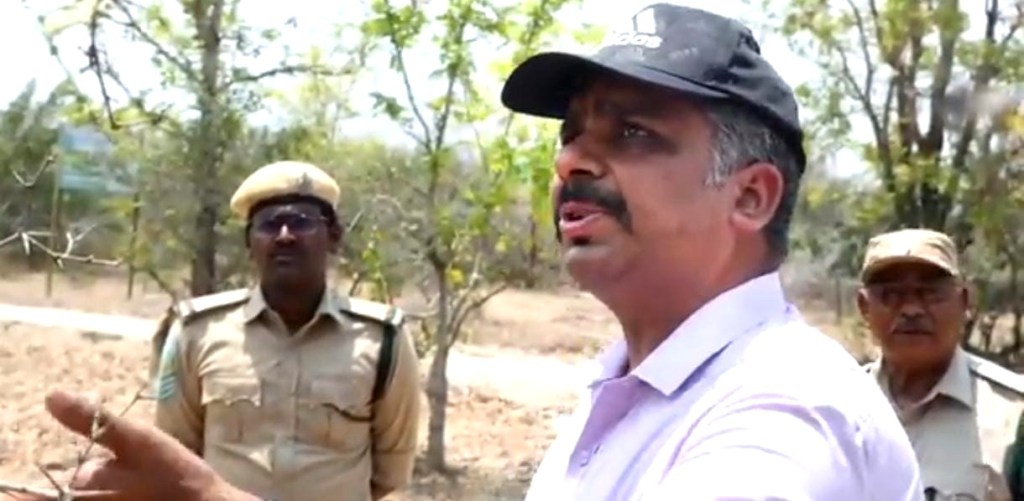
Why is the Jerdon’s Courser considered important from a conservation perspective?
Jerdon’s Courser is a rare, endemic and now a critically endangered bird. Once thought to be extinct since it’s last sighting in 1900, it was rediscovered in 1986. The bird is significant from conservation perspective due to it’s rareness and endemic nature. It symbolizes scrub forest habitat with shurbs such as Carissa spp. (Kalivi chettu) based on which it got it’s local name as Kalivikodi in Telugu (Kodi – bird, Kalivi – Carissa spp., a bird that resides on Kalivi chettu). The habitat destruction through land use change, irrigation facilities leading to cropping pattern changes etc caused a great amount of stress. Endemism along with threat to habitat and direct damage due to hunting etc. caused the bird numbers to decline. It’s a lesser known species due to it’s scarce sighting and nothing much is known about it. However like how it got rediscovered after almost a century in 1986, it is a nature’s miracle and based on this hope efforts are on to track the species again.

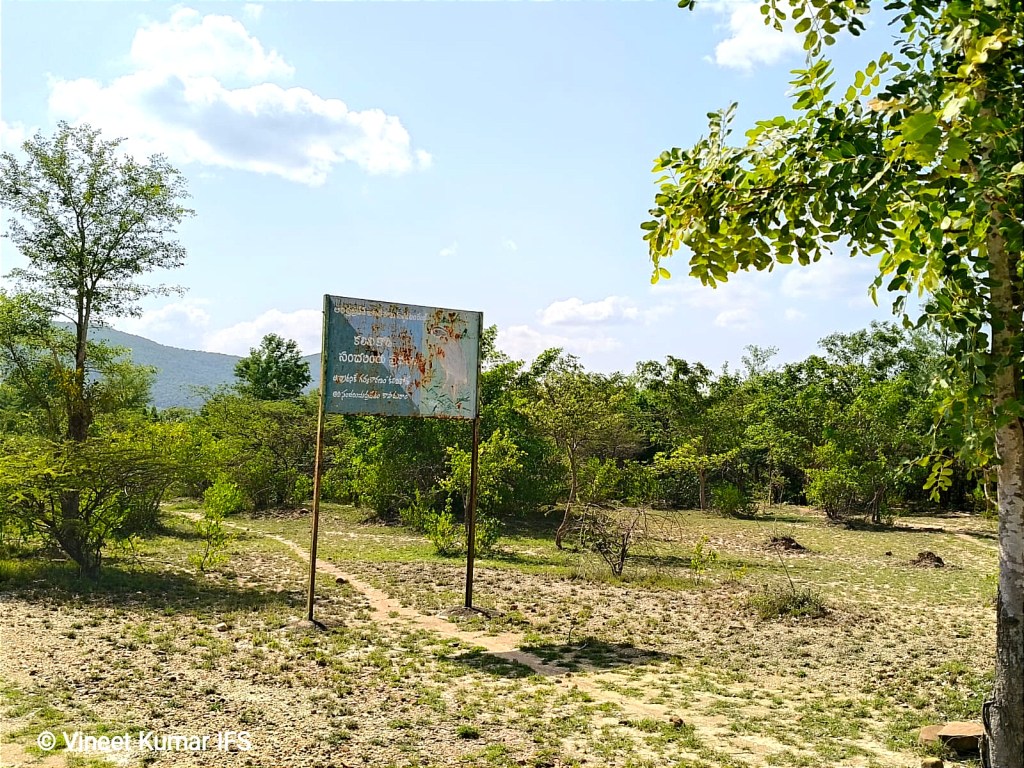
What are the unique features or behaviors of this bird that make it hard to trace?
Tracing Jerdon’s coursee is difficult due to it’s low numbers and hard to have sightings as it’s a noctural bird. Apart from this it’s behavior or nesting habits are not much known and hence their are few clues to look for in the field. Also it spends most of its time in shurbs having good camouflage. Since much is not known about it’s behavior and it’s low numbers is the exact reason for difficulty in tracing it. Also it is Obsevered that the sound of this bird is copied by other birds in the area sometimes making confirmation from audio devices difficult.
Since when has the Forest Department been actively surveying for this bird?
After the rediscovery of Bird in 1986, forest department has kept an eye on the habitat. The bird is believed to have valleys of Penna river in Kadapa, Anantapur and Nellore and valleys of Godavari river in Sironcha and Bhadrachalam as it’s habitat. To protect the birds habitat, Sri Lankamalleswara Sanctuary was declared and notified since 1998. Along with this another habitat of the bird which is separated from Lankamalleswara sanctuary by Sagileru river, Sri Penusila Narasimha wildlife Sanctuary is also being protected and monitored for the bird’s presence. More intense search has been taken in last decade or so with placing for camera traps and efforts of experts and NGOs with the support from AP Forest Department have also played a big role in it.
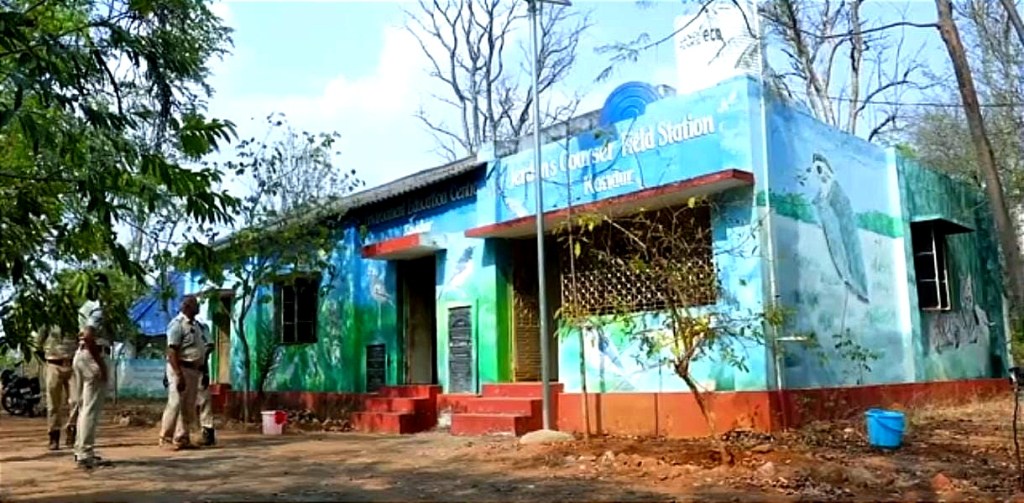
What challenges is the department facing in tracking this bird?
Awareness among locals regarding tracing and conserving the bird including it’s habitat is a key challenge. Livelihood opportunities for locals to reduce pressure on scrub forest which is home to the species is must for further conservation. Also scaling up of efforts is very much essential to cover large areas simultaneously. Going forward with the advances in technology and better devices department intends to overcome challenges of lack of field personnel.
Based on current efforts, how hopeful are you about tracing the bird’s presence again?
We are hopeful to trace the birds. Main reason for the same is continuous efforts to safeguard the habitat of the bird. The scrubland, shrubs, the Carissa spp., thorny bushes etc are all being protected by departments efforts day and night and it is a positive thought that the bird is having a safe habitat. Moreover we are on our way to step up the efforts in tracing by placing more audio devices, using better tools including softwares for monitoring especially AI and drones. Yanadi community can play a critical role in identification of the bird because of their traditional forest dwelling practices. Even they can help in identifying localised critical bird areas which can make the search more effective.
(ps: Sri Vineet Kumar IFS after getting posted in Kadapa district as a District forest officer, he took responsibility of protecting the bird and its habitat inside or outside district. He has been curious about the bird, a dream bird, following it before coming to AP. He and Rupak gathered all information which is there online offline, contacted all the keen experts, birders community and locals. Finally, during a regular field visit in the district prime location he suspected the bird in November 2024. But didn’t believe and thought that it might be some other similar species bird. Later during a Grass Survey in January 2025 a single specimen in the shade of bushes was seen. But couldn’t record it. His belief becomes strong that the bird is there hopefully. They both discussed all keypoints, had great discussions with experts also, decided to make a critical plan for Double Banded Courser protection and conservation whatever they can do in their limited capacity and experience. Aitanna (FBO Raychotti) was the only person who sighted the bird with naked eyes as they heard. Also he helped the foreign researchers and experts in finding the bird. Aitanna was a local person from Reddipalli village in Kadapa district found the live bird in 1986, forest department recognised his efforts and appointed him as FBO, retired in 2021 and died in 2022. His contribution will always be remembered.)
Further we expect that with rising awareness support from local communities will also increase as livelihood opportunity increased and habitat is under less pressure. It is with similar hope which yielded the results in rediscovery of the species in 1986 after almost 100 years that we are continuously putting the efforts to conserve this nature’s immensely unique creature.
Article by Vineet Kumar and Rupak.
written on 4th June 2025
Reference
https://www.euppublishing.com/doi/abs/10.3366/anh.2014.0211


 Rupak🌱